← Back to featured work

SaaS Platform · Internal MVP

Designing 360 Performance Review

Taking an internal performance-review product from an initial concept to a working MVP, then refining its workflows and privacy model through testing and early use.

context

Starting with a framework, not an interface

When I joined the project, there was no existing product or visual design. The primary stakeholder had an initial concept based on a management book that described different ways to evaluate performance. My job was to turn those ideas into roles, workflows and a usable interface.

Three perspectives on the same review

Administrators and HR teams needed to configure and monitor the process. Mentors needed to interpret feedback with employees. Employees needed to complete horizontal reviews for colleagues on their teams.

research and validation

Testing the model while designing the product

I coordinated usability sessions with seven colleagues. Later, around 40 people used the internal product and submitted feedback through the platform. This gave us evidence from both controlled tasks and real use, even though the product never reached a company-wide rollout.

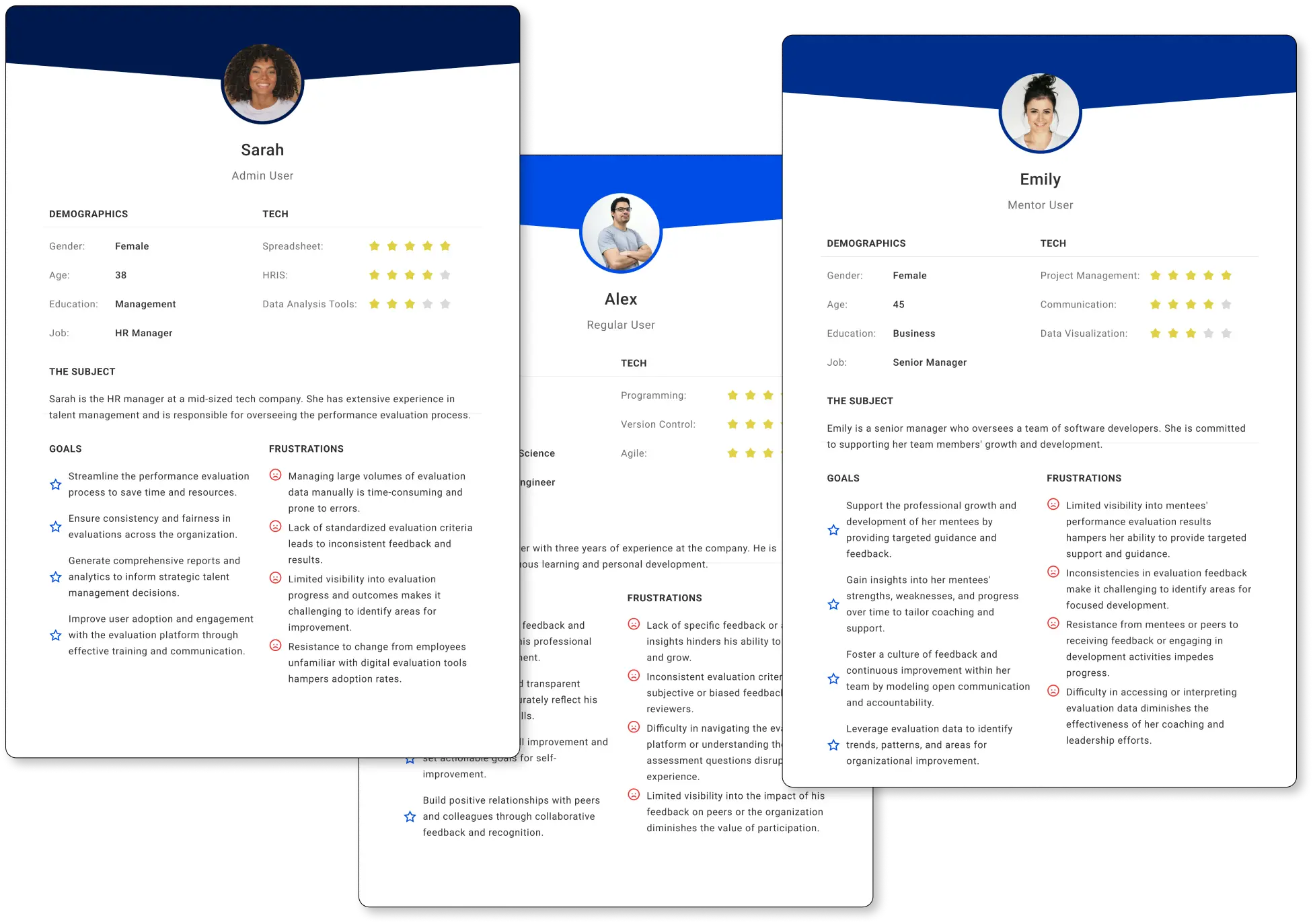
Research synthesis for administrator, employee and mentor roles.
Research synthesis organized the needs of administrators, employees and mentors around the same review cycle.

decisions

Clarifying evaluation, access and trust

Decision 01

Turn a conceptual framework into role-specific workflows

The source material described how people could be evaluated, but it did not define how an administrator would configure a cycle, how an employee would complete it or how a mentor would use the results.

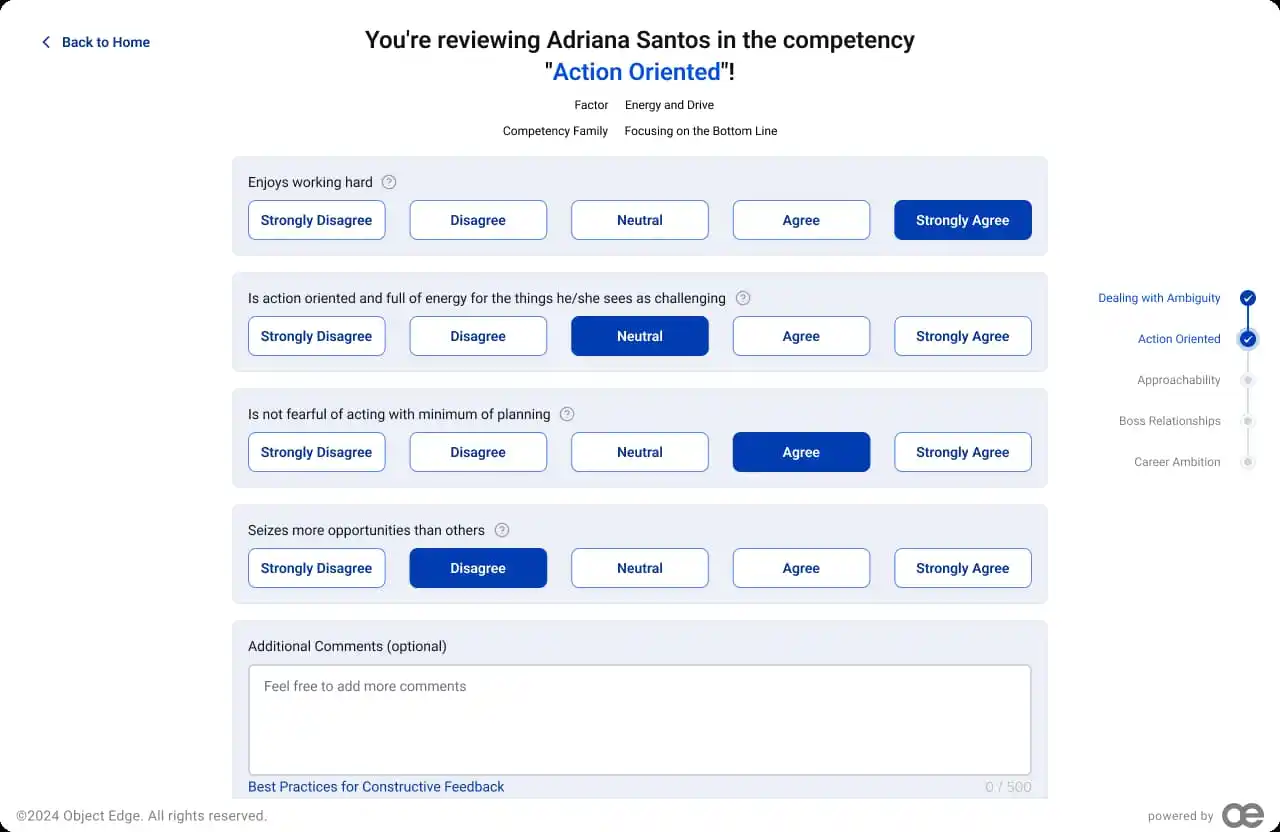
I separated operational oversight from the review experience. Dashboards and filters supported administrators and mentors, while the evaluation flow focused employees on one person, competency and set of questions at a time.
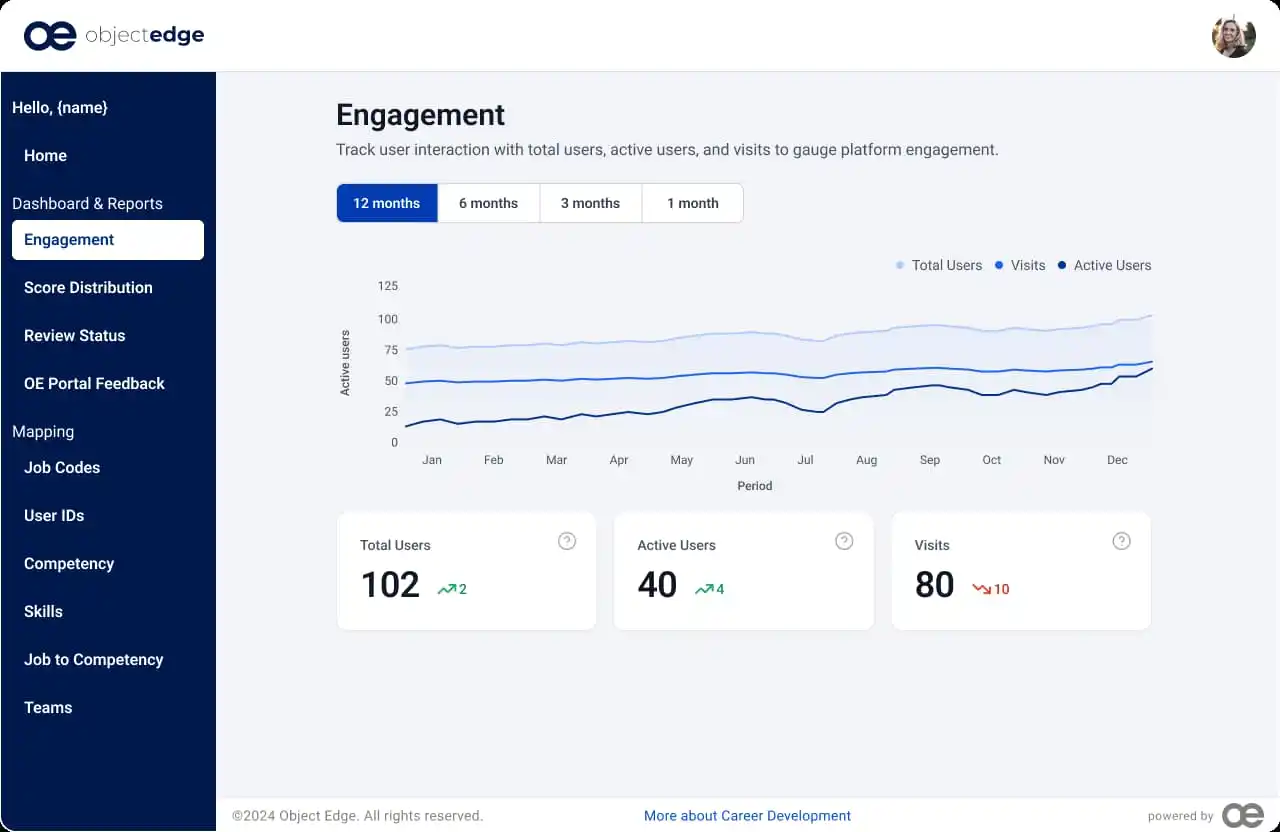
Administrator dashboard for monitoring engagement.
Administrator dashboard concept. The values shown are illustrative interface data, not pilot results.
Employee evaluation flow organized by competency.
The employee flow kept the current person, competency and progress visible while answering.

Decision 02

Simplify evaluation modes that users could not distinguish

Early versions offered two ways to evaluate: by person and by skill. During interviews and testing, the labels did not make the difference between those paths clear.

We simplified the terminology and the following iterations made each path easier to understand before starting a review. This reduced ambiguity at the point where users chose how to evaluate their colleagues.

Decision 03

Remove anonymity we could not honestly guarantee

Administrators wanted anonymous comments because they expected anonymity to encourage candid feedback. Employees questioned whether a workplace system could make those comments truly untraceable, and a developer flagged that people with database access could still identify the author.

We removed the anonymous option from the initial scope and made authorship explicit. The decision reduced perceived freedom for reviewers, but it aligned the interface promise with the technical reality of the product.

Decision 04

Make results useful beyond a numeric score

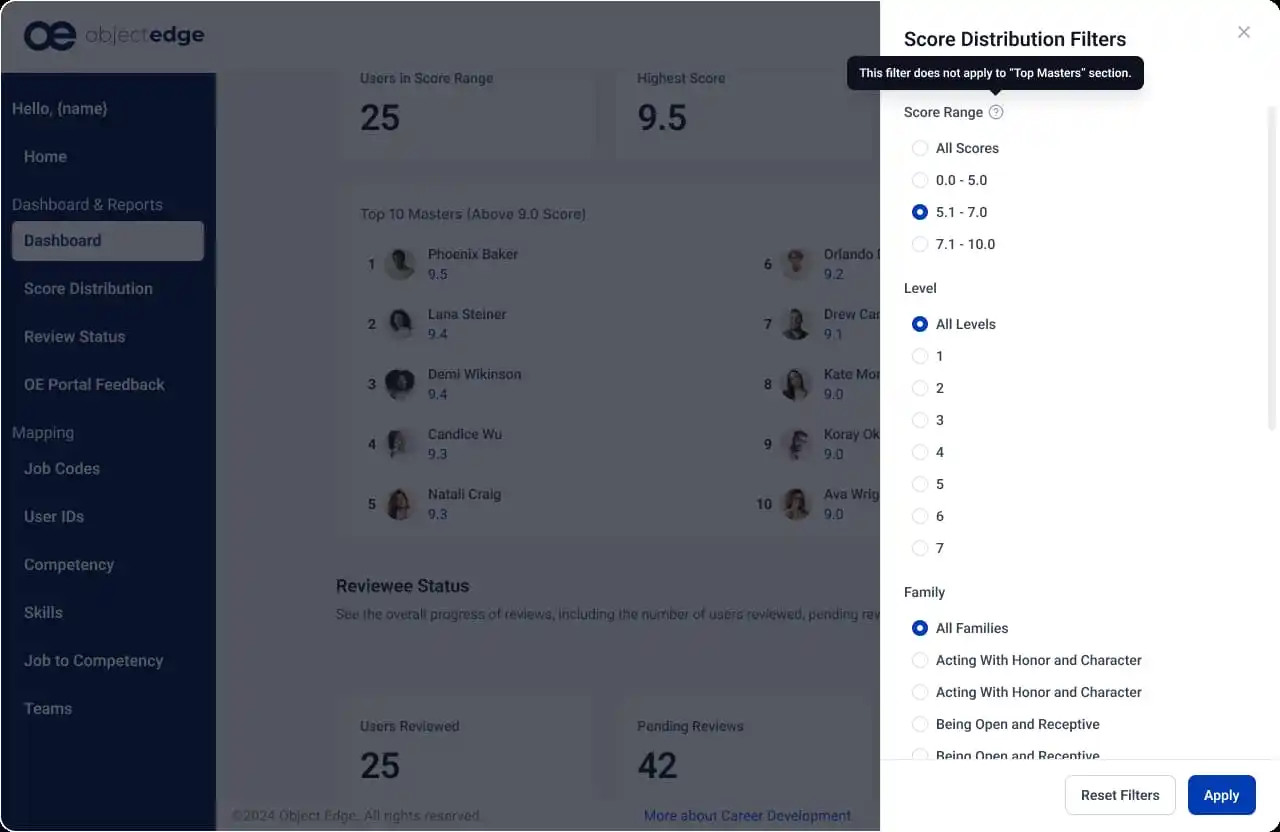
Ratings supported comparison across competencies, while written feedback preserved the context mentors needed for development conversations. Filtering helped administrators and mentors narrow the reporting view without mixing those tasks into the review form.

Score distribution filters for administrators and mentors.
Reporting filters helped narrow the evaluation context without leaving the results view.

outcome

A validated MVP that did not reach full rollout

What we learned

Testing exposed unclear evaluation labels and a misleading privacy assumption before a wider release. The limited internal use also gave the team ongoing feedback from roughly 40 colleagues.

Why the project stopped

The product was built by employees between client assignments. When the team moved onto client work, development was discontinued before a company-wide rollout.

More recently, the company revisited the broader problem through OE Portal, a wider internal platform in which feedback may eventually become one module rather than the core product.

Evidence base: seven usability participants and approximately 40 internal users before development stopped.

next case

Explore another project

View next case Back to all featured work