Investigating how players anticipate and recognize who will receive an interaction when several characters or animals are nearby.
The selected direction begins by identifying the potential target before the action menu opens.
context and role
Knowing the command did not always reveal its recipient
After returning to RDR2 following a long break, I recorded situations where I knew what I wanted to do but had to work out who would receive the action. I conducted the investigation, player research, HUD exploration and Figma prototyping.
Design question
How might I help players anticipate and recognize the target of an interaction while preserving RDR2's pace and their connection to its world?
This is an independent portfolio project with no affiliation with Rockstar Games and no access to the game code.
research scope
Three stages, with participants overlapping
01
In-game exploration
Seven players explored the map and completed a mission while verbalizing their intentions. I observed intention, action and recovery.
02
Visual evaluation
Seven players compared ways to indicate the recipient. Two had also participated in the first stage.
03
Controller prototype
The same seven from the visual evaluation tested identification and target switching with a PS5 controller.
problem definition
From a broad controls audit to one interaction problem
I documented issues involving recalled controls, contextual actions, selected objects and system feedback. Target selection became the focus because it appeared in my recordings and in sessions with other players, and could be investigated through a specific change to feedback.
Horse actions, person selected
Some participants prepared an action with the horse in mind while horse options remained visible, then interacted with a nearby person. The action was available, but the recipient did not match their intention.
Driver intended, passenger selected
Near a carriage, one participant wanted to address the driver but the interaction went to the passenger. The difference changed whether the action could achieve the intended outcome.
Recovery still created friction
Participants knew how to move the camera or switch targets, yet hesitated while identifying who was selected. Ease of recovery did not remove the mismatch between intention and feedback.
Focused hypothesis
A cue closer to the recipient could help players associate the command with the character. An explicit switching instruction could also expose how to correct the selection.
concept exploration
Three approaches across two scenarios
I applied each direction to a horse with nearby NPCs and to a wagon with two occupants. The concepts addressed different moments: anticipating a target before selection and recognizing it after the menu opened.
Direction A
Portrait and description in the HUD
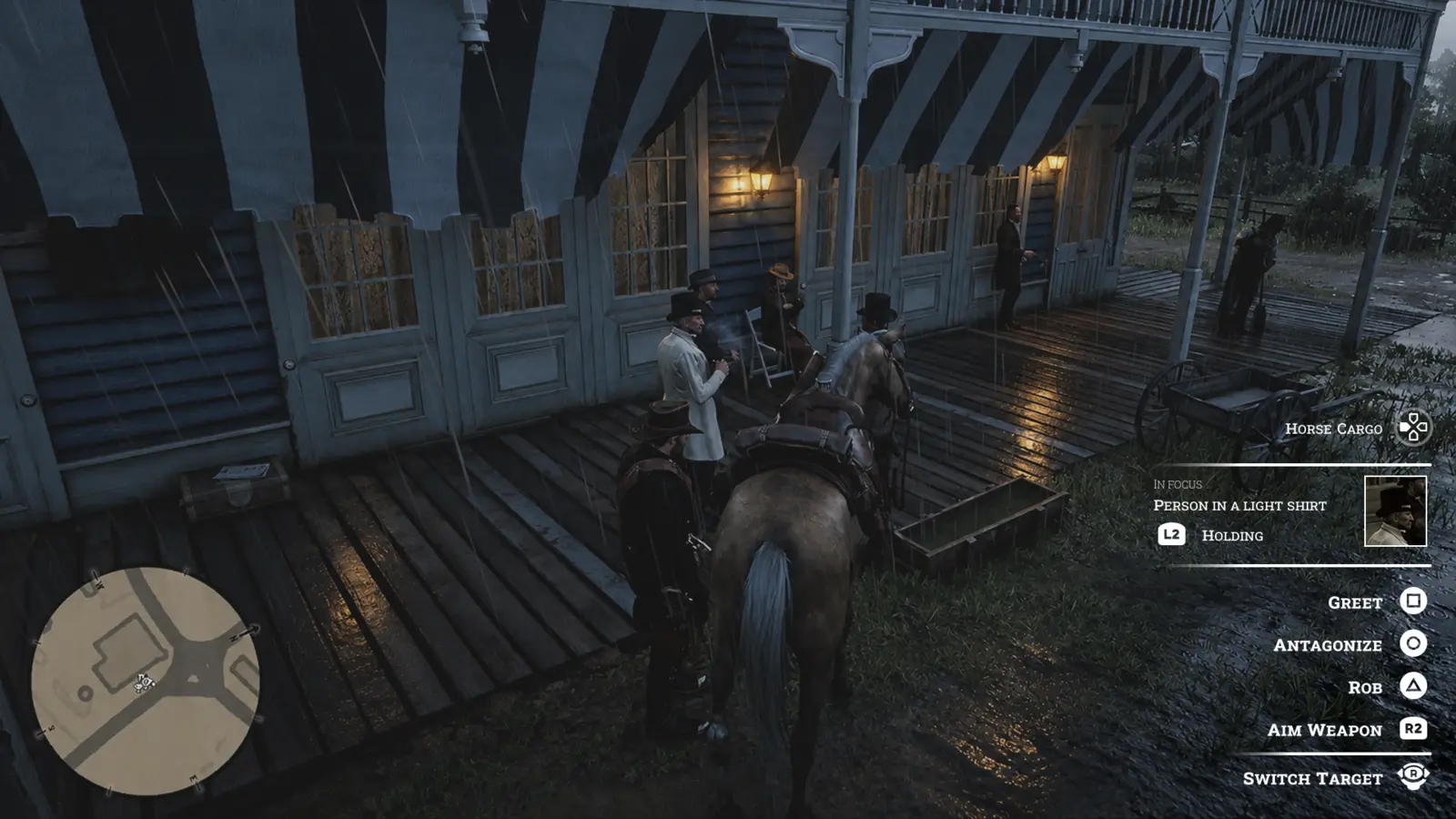
The portrait avoided adding another marker over the scene, but participants still had to compare a small image in the HUD with the characters in the world. I observed more hesitation and did not pursue it as the primary direction.
Direction A kept target identification inside the existing action area.
Direction B
Marker near the selected character
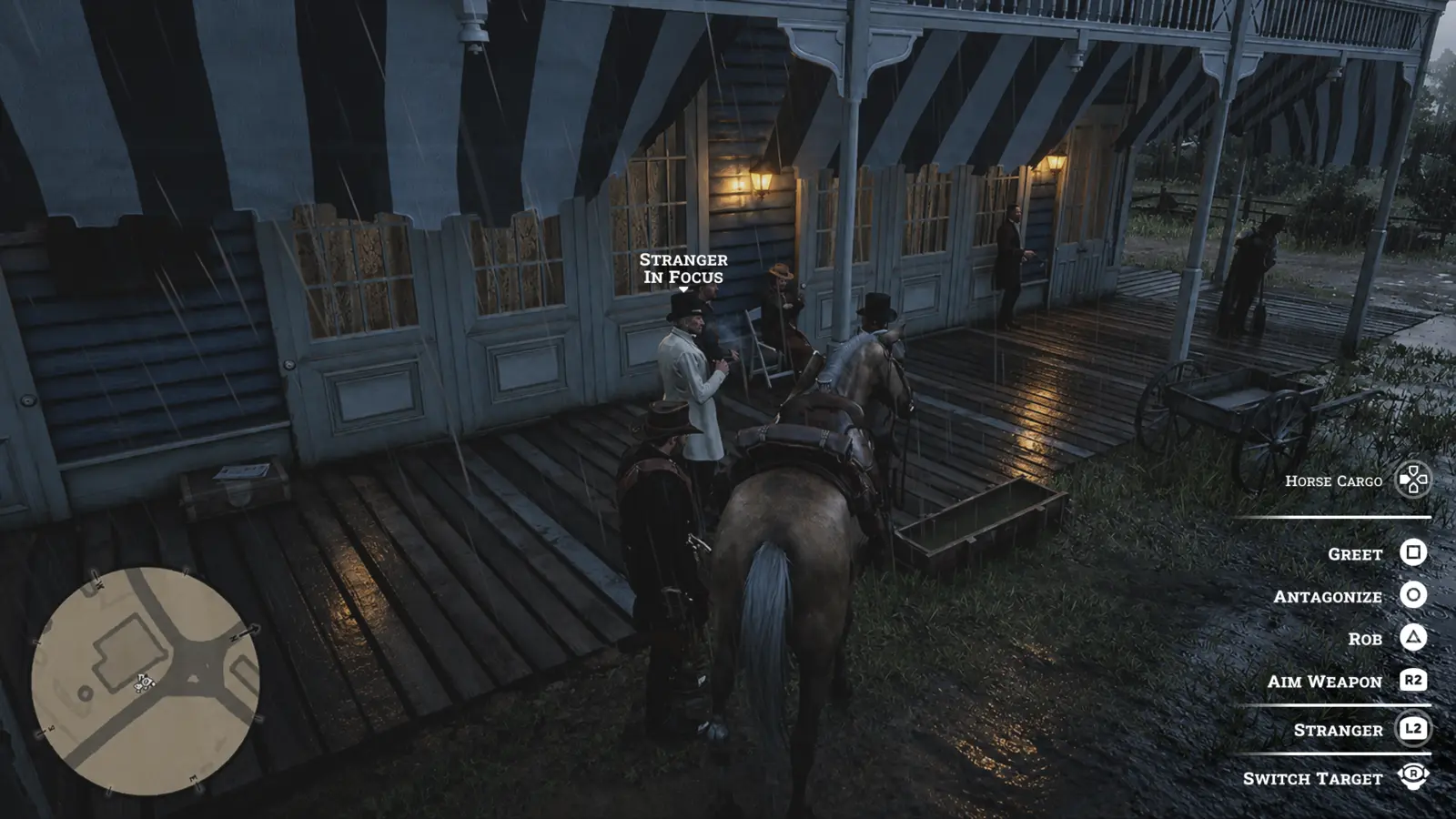
The marker linked selection directly to the NPC while preserving the action list in its existing corner. It reduced the need to compare the scene with a separate representation.
Direction B connected the selected character to the available actions.
Direction C
Prompt over the target before selection
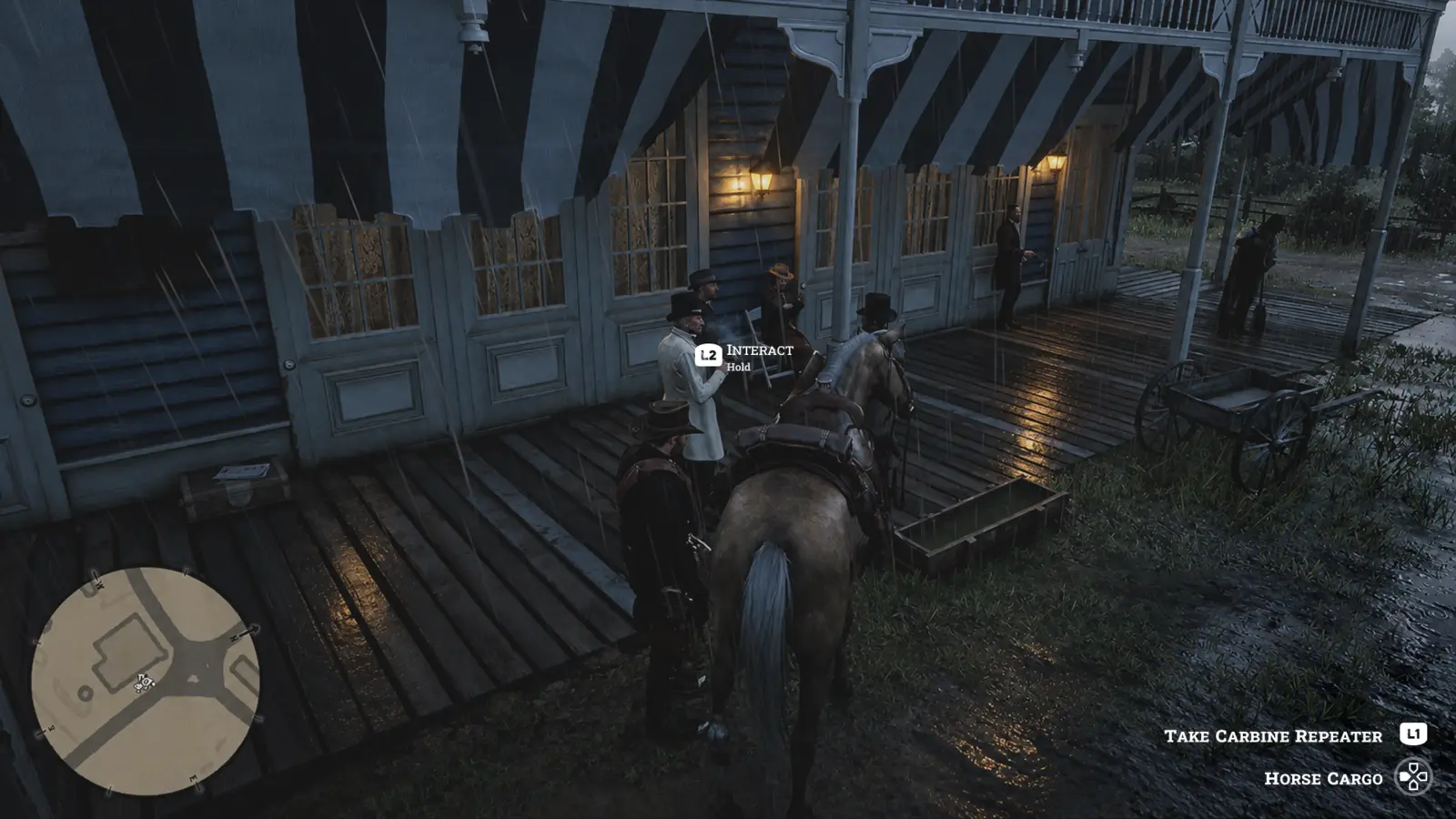
Placing L2 and “Interact” over the potential target addressed the earlier moment: helping players anticipate the recipient before opening the action menu. All seven participants associated L2 with the indicated NPC in the visual evaluation.
Direction C made the potential recipient visible before holding L2.
chosen solution
Anticipate first. Confirm during interaction.
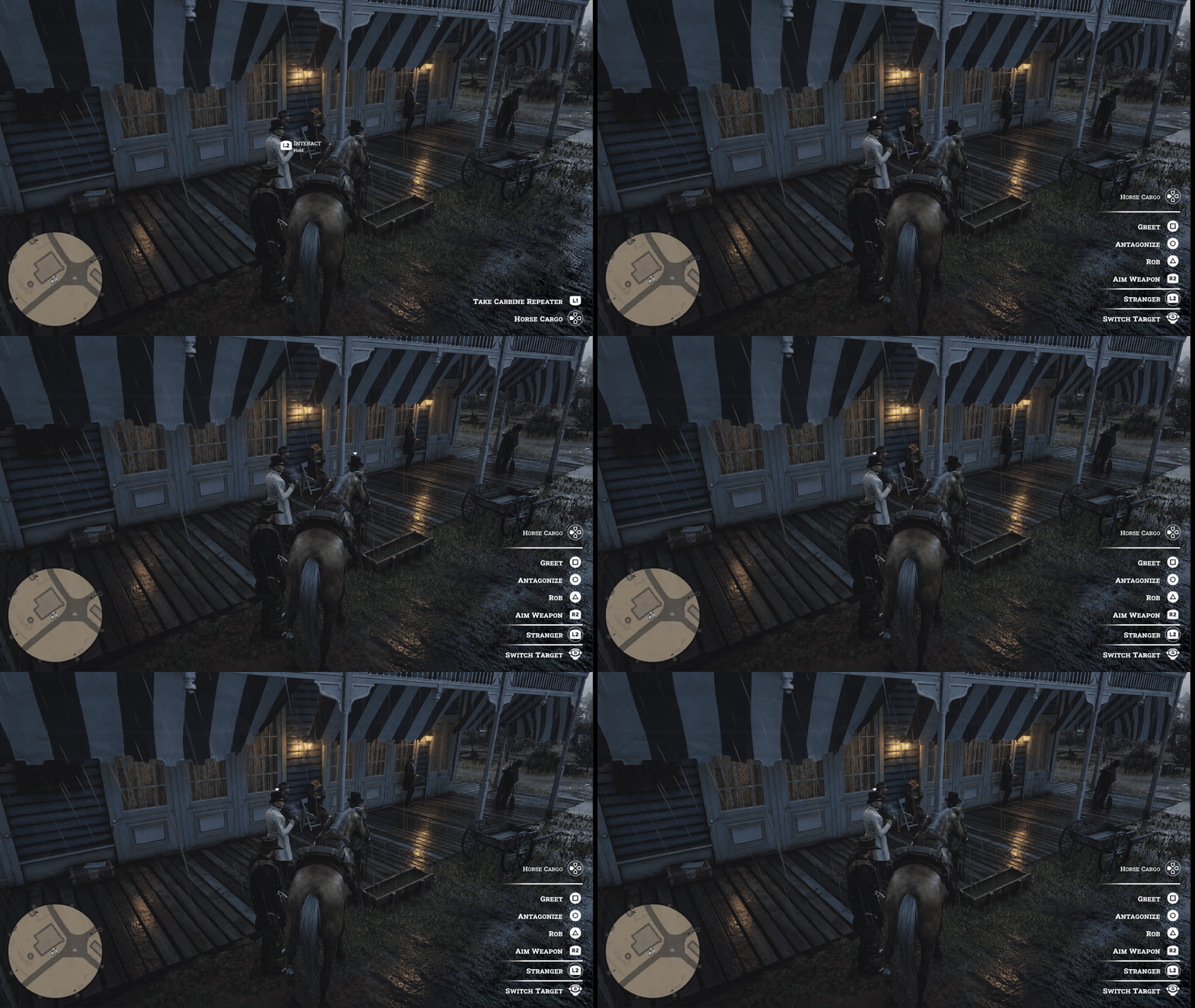
I combined the prompt from Direction C with the proximity of Direction B. Before L2, the prompt identifies the potential target. During selection, a marker follows the selected NPC, the actions stay in the lower-right HUD, and “Switch Target” remains visible beside them.
Before L2Prompt over the potential target
Anticipate who will receive the interaction.
During selectionMarker on the NPC
Connect the recipient to the available actions.
When switchingMarker follows the target
Make the change immediately perceptible.
The controller-based prototype shows the selected marker moving between nearby characters while the available actions remain in the lower-right HUD.
I replaced generic screen clicks with buttons from a PS5 controller connected to the computer. The same seven participants from the visual round then tested target recognition and switching.
7 of 7
Understood anticipation
All associated the L2 prompt with the indicated NPC.
7 of 7
Switched targets
All completed target switching without observed difficulty in the tested flow.
7 of 7
Read the overlapping scene
None had difficulty identifying the target when two characters partially overlapped.
1 direction removed
Avoided extra HUD comparison
The portrait remained understandable but added comparison between two screen areas.
The final participants already knew the proposal and the scene. The prototype tested comprehension and execution, not first exposure, moving targets, combat or every contextual rule in the game.
what I learned
Command clarity depends on knowing who will receive it
Players could know the correct input and still hesitate because the selected recipient was unclear. Adding information to the HUD could preserve that comparison effort. The strongest direction linked feedback directly to the relevant character while keeping the action list in a familiar location.
A playable implementation should next test moving targets, entering and leaving interaction range, denser NPC groups, different viewing distances and players with no prior exposure to the proposal.
secondary research
Sources used to broaden the investigation
These sources supported hypothesis development and opposing perspectives on friction, pacing and access to information. Public comments were treated as exploratory evidence rather than prevalence data.